Can an Air Source Heat Pump Work in an Older Northamptonshire Home?
Older homes can run very well on a heat pump when the system is designed around the building. Here is what to check in Northamptonshire.
The Short Answer
Yes, in most cases. Air source heat pumps are installed every day in Victorian terraces, interwar semis and stone cottages. What matters is not the age of the house but how much heat it loses and whether the heating system is designed to replace that heat at a lower water temperature.
Northamptonshire's Older Housing
Northampton has large areas of Victorian and Edwardian terraces, many dating from the town's boot and shoe era, in areas such as Semilong, St James and Far Cotton, larger period homes around Abington and Phippsville, and post-war and modern estates in places such as Duston and Weston Favell. Across Northamptonshire, villages and market towns such as Oundle and Brackley have many older homes built from local limestone or ironstone, while Corby has a large stock of post-war new town housing.
Each of these brings its own questions. Terraces often have limited outdoor space and nowhere obvious for a hot water cylinder. Interwar semis usually have cavity walls that can be insulated cheaply. Stone and solid-wall homes lose more heat through the walls, and they need breathable materials if insulation is added.
What Actually Determines Suitability
- Heat loss. A room-by-room calculation shows how much heat each room needs on a cold day. This sets the heat pump size and the radiator sizes.
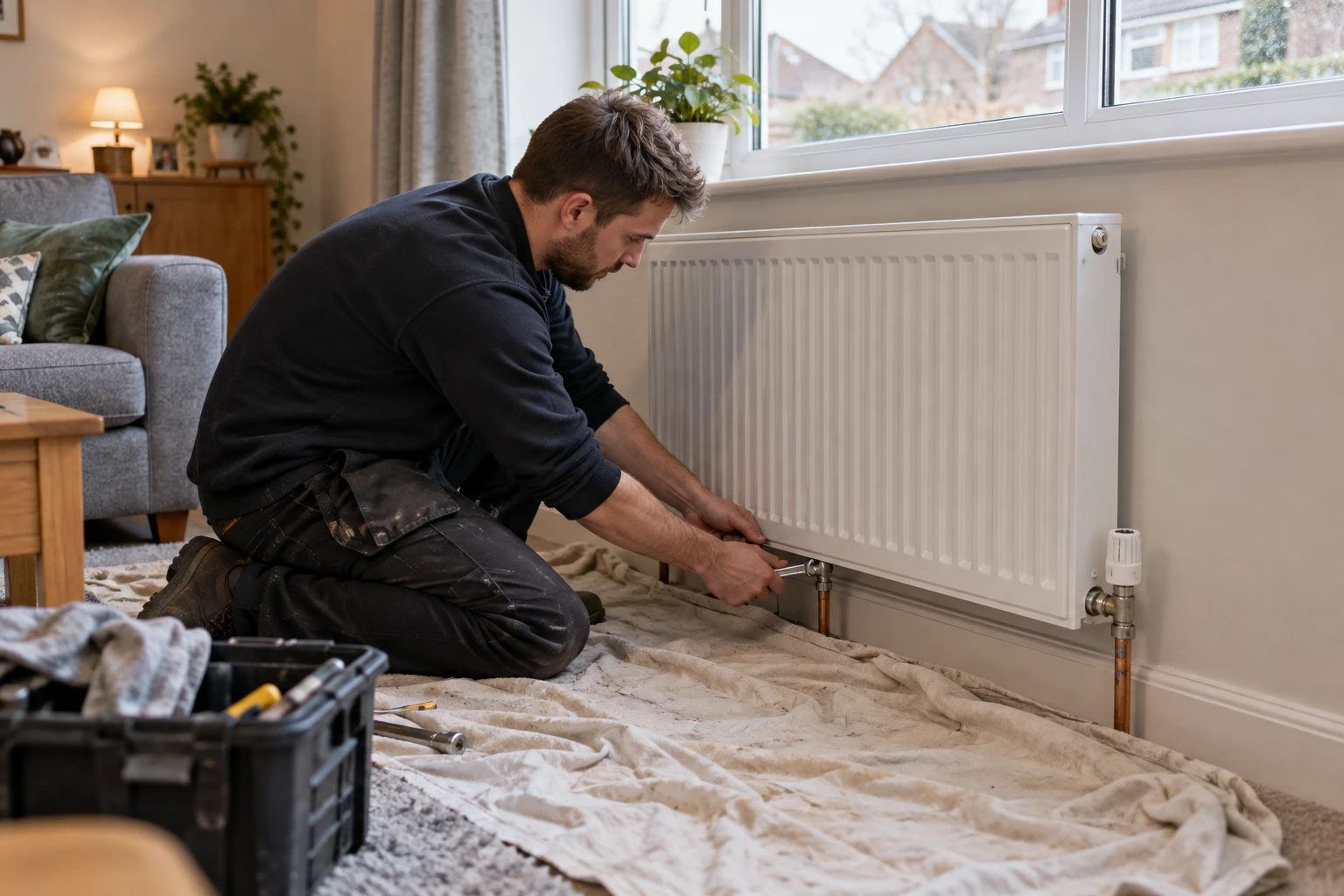
- Radiators. Heat pumps run most efficiently at flow temperatures around 35 to 50°C. Some radiators will need to be larger to deliver enough heat at those temperatures. Many will not.
- Insulation and draughts. Loft insulation, draught-proofing and cavity wall insulation, where suitable, are usually the cheapest improvements and can reduce the heat pump size needed.
- Hot water. Most systems need a cylinder. In a terrace, an airing cupboard, loft or under-stairs space can often be used.
- Outdoor unit. It needs airflow, a solid base and a sensible pipe route. Noise is assessed against the MCS standard.
Solid Walls, Stone and Damp
Solid brick and stone walls lose more heat than cavity walls, but that does not rule out a heat pump. It means the system is sized for a higher heat loss and radiators are chosen to match. If you plan to insulate solid walls, use materials suited to older buildings, because the wrong insulation can trap moisture. Fix any existing damp first.
Listed Buildings, Conservation Areas and Planning
Most air source heat pumps on houses in England are permitted development, so they do not need a planning application, provided certain conditions are met. Listed buildings always need listed building consent for external works, and positions facing a road in a conservation area may need planning permission.
Since 2021 Northamptonshire has had two unitary councils. West Northamptonshire Council covers Northampton, Daventry, Towcester and Brackley. North Northamptonshire Council covers Kettering, Corby, Wellingborough, Rushden, Raunds and Oundle. Your installer should check the rules for your address before you commit.
Cold Weather
Northamptonshire is fairly low-lying, so winter design temperatures are typical for the Midlands. A correctly sized system for a Northampton home should cope comfortably with a normal cold snap. A heat pump keeps working well below freezing. Its efficiency falls in very cold weather, which is why correct sizing for your local design temperature matters.
Steps to Take
- Do the cheap insulation and draught-proofing jobs first.
- Get a survey with a room-by-room heat loss calculation.
- Ask which radiators need upgrading and why.
- Agree where the cylinder and outdoor unit will go before you sign.
- Check the Boiler Upgrade Scheme to reduce the cost.
Get a free, no-obligation estimate
Tell us about your home and we will pass your enquiry to up to three vetted, MCS-certified partner installers covering Northamptonshire.
This guide is general information, not advice for your specific property. Grant rules, prices and tariffs change, so confirm details with your installer and on GOV.UK before committing. See our Disclaimer.