How Much Does an Air Source Heat Pump Cost in Northampton?
A practical 2026 guide to installation prices, grants and running costs for homeowners in Northampton and across Northamptonshire.
The Short Answer
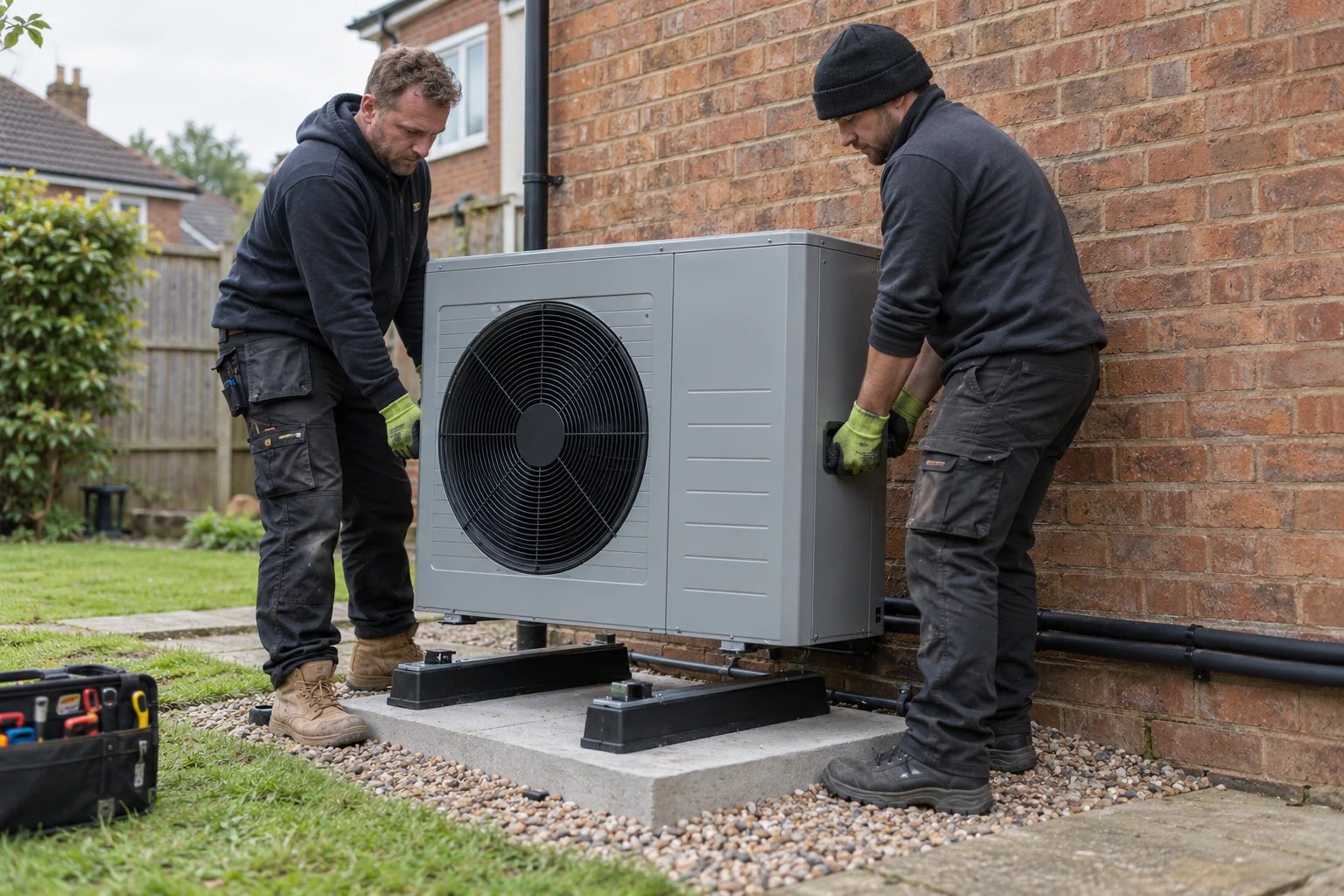
A typical domestic air source heat pump installation in the UK costs in the region of £12,000 before any grant. Quotes for individual homes can be noticeably higher or lower, depending on the size of the property and how much of the existing heating system needs to change.
Most homeowners in Northamptonshire who replace a gas, oil or LPG boiler can claim the Boiler Upgrade Scheme grant, currently £7,500 for an air source heat pump. On a £12,000 project, that would leave around £4,500 to pay. Eligible off-gas-grid homes replacing oil or LPG heating can receive £9,000 under temporary arrangements until 31 March 2027.
What Affects the Price?
- Heat pump size. The output needed depends on how much heat your home loses on a cold day, which is worked out with a room-by-room heat loss calculation.
- Radiators. Heat pumps run at lower water temperatures than boilers, so some rooms may need larger radiators. Others can often stay as they are.
- Hot water cylinder. Most air-to-water systems need a compatible cylinder. If you have a combi boiler, finding space for one is part of the cost.
- Pipework and electrics. Undersized pipes, long pipe runs or an older consumer unit can add to the work.
- Outdoor unit position. A short, simple route from the outdoor unit into the house keeps costs down.
- Removing the old system. Decommissioning an oil tank or LPG supply is an extra item on some quotes.
How Northamptonshire Homes Affect the Cost
Northampton has large areas of Victorian and Edwardian terraces, many dating from the town's boot and shoe era, in areas such as Semilong, St James and Far Cotton, larger period homes around Abington and Phippsville, and post-war and modern estates in places such as Duston and Weston Favell. Across Northamptonshire, villages and market towns such as Oundle and Brackley have many older homes built from local limestone or ironstone, while Corby has a large stock of post-war new town housing.
A well-insulated modern semi often needs a smaller heat pump and few radiator changes, so it tends to sit at the lower end of the price range. A larger period home with solid walls usually needs more output, more radiator upgrades and sometimes insulation work first, which pushes the cost up. Neither is a reason to rule a heat pump out, but it is why a survey matters more than an online calculator.
Running Costs Compared With a Boiler
Running costs depend mainly on two things: how efficiently the system is designed and installed, and your electricity tariff. Efficiency is measured as a seasonal coefficient of performance (SCOP). A SCOP of 3 means the heat pump delivers about three units of heat for every unit of electricity it uses, across a whole year.
Electricity costs more per unit than gas, so a well-designed heat pump on a suitable tariff is often similar to, or a little cheaper than, a modern gas boiler. The saving is usually clearer for homes replacing oil, LPG or old electric storage heaters. Many villages in rural West and North Northamptonshire, for example around Daventry, Towcester and Oundle, are off the gas grid and rely on oil or LPG. For those homes, the £9,000 grant and the higher cost of oil or LPG often make the numbers more attractive.
Many energy suppliers now offer tariffs designed for heat pump owners, with cheaper rates at certain times of day. Ask your installer to show running cost estimates based on your current fuel bills rather than national averages.
How to Get an Accurate Price
- Ask for a proper survey and room-by-room heat loss calculation, not a price over the phone.
- Use an MCS-certified installer, which is a condition of the grant.
- Check the written quote shows the full cost, the grant deduction and what you will actually pay.
- Make sure radiator changes, the cylinder, electrical work and making good are itemised.
- Compare at least two or three quotes.
Northamptonshire is fairly low-lying, so winter design temperatures are typical for the Midlands. A correctly sized system for a Northampton home should cope comfortably with a normal cold snap.
Areas We Cover
We connect homeowners across Northamptonshire with vetted local partner installers, including:
Get a free, no-obligation estimate
Tell us about your home and we will pass your enquiry to up to three vetted, MCS-certified partner installers covering Northamptonshire.
This guide is general information, not advice for your specific property. Grant rules, prices and tariffs change, so confirm details with your installer and on GOV.UK before committing. See our Disclaimer.